Achieving Net Carbon Zero
In 2022, voestalpine AG announced a major new initiative to achieve net zero carbon emissions in its Metal Forming Division by 2035, some fifteen years ahead of the targets set by the Intergovernmental Panel on Climate Change.
June 5, 2023

As part of that division, voestalpine Metsec has created its own Roadmap to Net Zero, which establishes targets and strategies for achieving Net Carbon Zero across all its operations in the UK.
Overseeing the move to Carbon Net Zero is Environmental, Safety & Training Manager, Steve Giles, who comments, “Achieving this industry-leading target requires a focused effort within our company together with the co-operation of suppliers and others in the value chain.
“We have taken a multi-faceted approach to achieving Net Carbon Zero, which includes investigating areas where we can save energy and optimise processes as well as exploring ways to source green electricity and even generate our own renewable energy.”
Green electricity
To date, this initiative has seen voestalpine Metsec move its electricity requirements to 100% renewable sources, resulting in a 67% reduction in its carbon footprint, from 1500 tonnes of CO2 to 500 tonnes of CO2 per year.
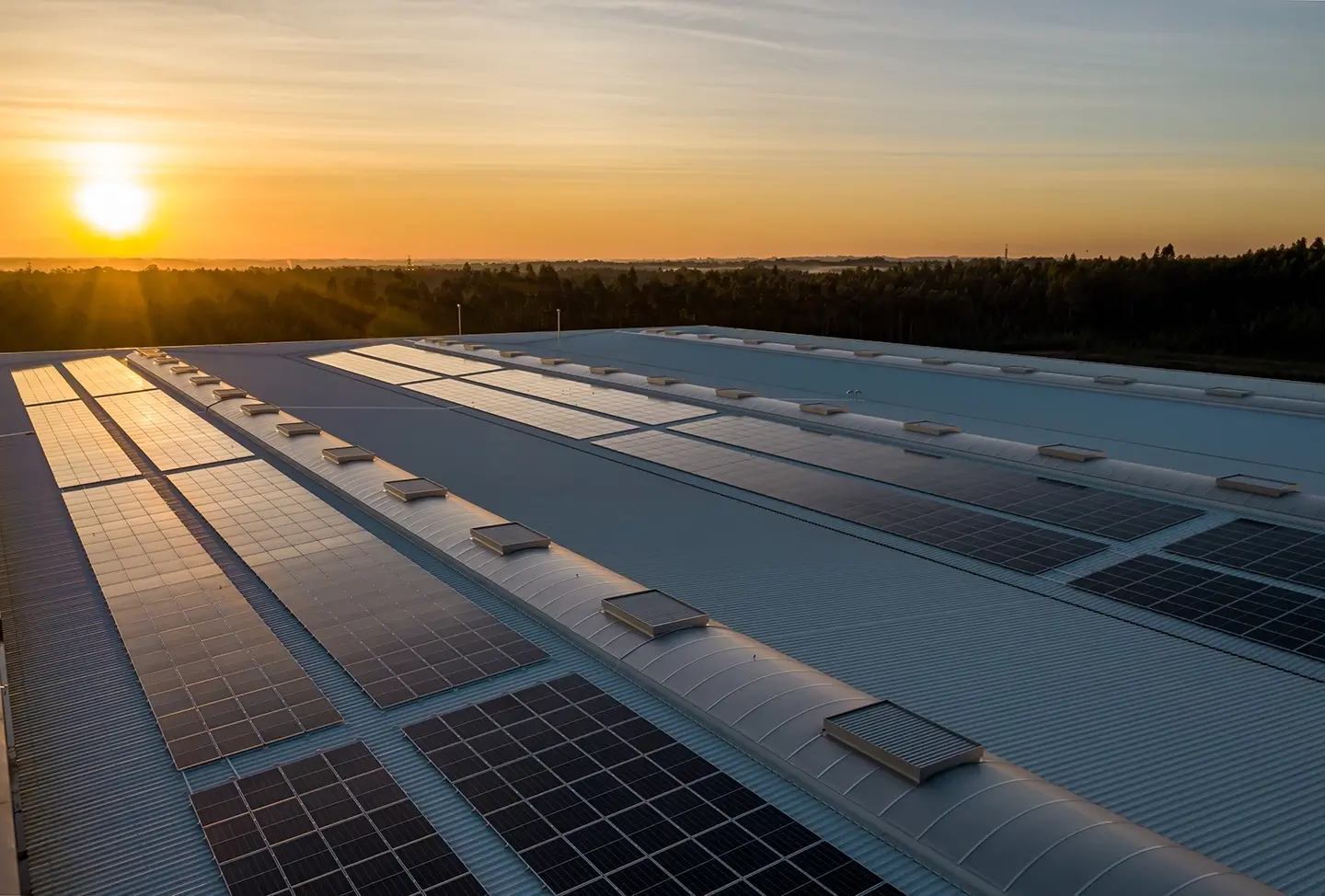
Further measures include the installation of solar panels on the roofs of the company’s manufacturing facilities. Phase One of this programme has already been completed, with an array of solar panels being fitted to the Framing and Purlins manufacturing units. The array comprises 2223 photovoltaic panels and covers some 4446 square metres of roof space. This will generate 707,430 kWh of electricity per annum accounting for 100% of our daytime electricity needs as well as feeding 1.32 MWh of energy back to the grid, which is sufficient to power the equivalent of more than 200 homes.
Phase Two of the solar panels project, comprising 2468 photovoltaic panels and covers 4936 square metres of roof space, is due to be completed by August 2023 and will create an additional 753,270kWh/year.
In total, the solar panels are expected to provide 40% of voestalpine Metsec’s total electricity requirements when the installation is completed. They will not only reduce the company’s reliance on electricity from the National Grid but will also return unused electricity to the Grid at times when the facilities are not in operation, such as evenings, weekends and bank holidays.
More energy-saving
Further measures aimed at reducing the company’s impact on the environment and achieving Net Carbon Zero include a host of energy-saving schemes throughout our operations. These include, replacing company cars with hybrid and electric vehicles, installing charging points across our site, reducing gas consumption and investment in sophisticated, state-of-the-art energy management systems.
Around half of the voestalpine Metsec’s fleet of company cars consists of hybrid or fully electric vehicles. More will be introduced as and when the current fleet is replaced.
The company has also installed nineteen, free to use electric car charging points across its Oldbury site, ranging in size from 7.2kW to 50kW.
Similarly, fork-lift trucks previously powered by Liquefied Petroleum Gas are being updated with new electric versions.
The installation of improved thermal insulation across all facilities, energy-efficient LED lighting and tailored energy management systems have made further, considerable contributions towards voestalpine Metsec’s target of Net Carbon Zero by 2035.
Commercial benefits of Net Carbon Zero
In addition to reducing costs and contributing towards a cleaner environment, the move towards Net Carbon Zero might also have benefits for the commercial team as Framing Sales Director, Chris Holleron explains; “The construction industry will come under increasing pressure to meet environmental targets which encompass the entire design, construction and ultimate demolition of a building, including reuse of the materials from which it has been constructed.
“In London, medium- and large-scale construction projects already require an Environmental Product Declaration (EPD) and carbon footprint statements as part of the planning application under the London Plan 2021, which aims to minimise greenhouse gas emissions and imposes specific requirements based on achieving net carbon zero by 2050.
“Net carbon zero also forms part of the government’s procurement policy, with the Cabinet Office’s Action Note PPN06/21 stipulating how government departments need to take account of suppliers’ Net Zero Carbon Reduction Plans when procuring for major government contracts.
“Under these policies, all materials and processes used in construction will need to meet criteria designed to assure net zero carbon emissions. Along with other parties invested in the project, materials manufacturers will need to state and prove the environmental credentials of their products and systems.”
voestalpine Metsec leads the way
As the UK’s largest designer and manufacturer of constructional steel systems, voestalpine Metsec has always been at the forefront when it comes to setting, adopting, maintaining and verifying the most rigorous standards across all of its operations.
Key to the company’s Carbon Net Zero commitment is not only the continuous interrogation and improvement of its processes to achieve net zero by 2035 but also providing designers and contractors with confidence that Metsec systems, and their efficient installation, are as environmentally responsible as possible.